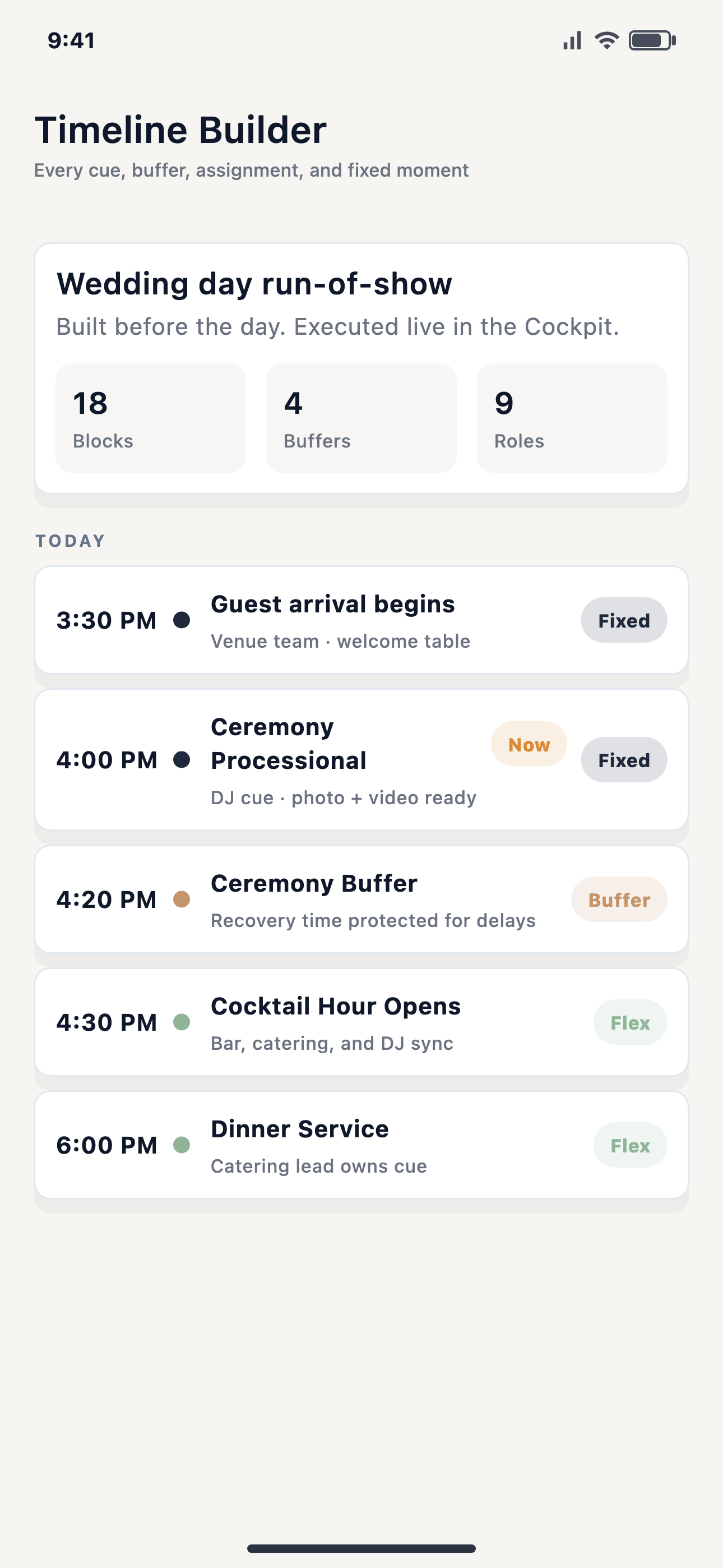
Planning your own wedding does not mean you have to run it yourself.
A DIY wedding day-of coordinator can be a trusted friend, relative, or other reliable person who helps keep the plan moving while you get to be present for your wedding. The key is not handing someone a vague list the night before. It is giving them a clear, complete handoff well before the day.
For a smaller or micro wedding, that handoff can be simple. You may only need a timeline, vendor contacts, a few ceremony cues, and a plan for setup and close-out. For a larger or more complicated wedding, a professional month-of coordinator may be the better fit.
What is a DIY wedding day-of coordinator?
A DIY wedding day-of coordinator is a trusted person who carries out a wedding-day plan the couple has already prepared. They are not expected to become a professional planner overnight, negotiate contracts, solve every emergency, or replace a venue team.
Their job is to be the calm point person for the plan: welcome and direct vendors; keep an eye on the timeline; cue the ceremony and key reception moments; answer routine questions so the couple does not have to; help the right person find the right information; and follow the setup, payment, and close-out instructions already prepared.
Many professional “day-of coordination” packages actually begin weeks before the wedding. Professionals use that time to learn the venue, review logistics, confirm vendors, and build a detailed master timeline. If you are handing the role to a trusted non-professional, you and your partner need to do that preparation yourselves. Your trusted lead should receive a finished plan, not be asked to build one while they are trying to enjoy the day.
Can a friend be your day-of wedding coordinator?
Yes, for the right wedding and the right person.
A trusted friend or relative can be a strong day-of lead when the wedding is reasonably simple, the couple has prepared the details in advance, and the person is free to focus on the job.
Choose someone who is:
- Organized, punctual, and comfortable with a checklist.
- Calm when plans change.
- Comfortable politely directing people.
- Available from setup through the handoff at the end of the night.
- Not responsible for a major wedding-day role.
Usually, avoid asking your maid of honor, best man, parent, sibling, ceremony reader, toast-giver, or anyone managing children or elderly relatives. Those people already have meaningful personal responsibilities and deserve to experience the celebration.
A good trusted lead is often a capable cousin, aunt, family friend, colleague, or friend with project-management, stage-management, hospitality, or event experience. If possible, thank them in a meaningful way. Even a modest payment, gift, meal, or covered accommodation recognizes that they are giving up part of their guest experience to support you.
When a professional coordinator is the better choice
A trusted lead is not a substitute for a professional coordinator in every situation. Consider hiring a professional if your wedding has multiple locations, shuttles, or complicated travel timing; a large wedding party or long guest list; many independent vendors with detailed setup needs; a complex venue, tented event, private property, or major rental plan; significant decor installation or teardown; family tension, vendor disputes, or a high likelihood of last-minute changes; or a couple who does not have time to prepare the handoff in advance.
A professional coordinator brings experience, vendor knowledge, and practiced problem-solving. A trusted lead can execute a well-prepared plan. Those are different roles, and it is fair to be honest about the difference.
The 30-day DIY wedding handoff plan

Four weeks before: choose the lead and create one source of truth
Start by naming one trusted lead and one backup contact. Then bring the important details into one shared place. Your lead should be able to find the complete wedding-day timeline; vendor names, phone numbers, arrival times, and load-in instructions; ceremony order and music cues; family-photo list and the person assigned to gather family members; setup instructions with photos if needed; payment or gratuity instructions; emergency contacts and backup plans; and end-of-night responsibilities.
This is also the time to decide what your lead is not responsible for. Vendors should continue handling their own professional work. Your caterer manages food service. Your DJ or band manages sound. Your officiant handles legal ceremony requirements. Your venue team manages its property and policies.
Two weeks before: walk through the day together
Do not wait until the rehearsal or wedding morning. Meet with your trusted lead and walk through the wedding from arrival to close-out. Talk through who opens the venue, where vendors park and unload, who has the rings, marriage license, cards, and gifts, who cues the processional, who gathers family for photos, when toasts and the exit happen, who handles a late vendor call, and who takes personal items home.
A detailed timeline is more useful than a list of broad milestones. Include where each moment happens, who needs to be there, and who has decision-making authority if plans shift.
One week before: confirm and simplify
Confirm vendor arrival windows, contact details, and any final balances directly with each vendor. Put cash gratuities or final payments into clearly labeled envelopes only if they are appropriate for your plan.
Then simplify the workspace your lead will see. For a micro wedding, you may not need complex seating, guest-import, or vendor-management tools. You still need the essentials: a timeline, checklist, key contacts, handoff instructions, and the people assigned to make decisions.
Keep the view focused. A trusted lead should not have to search through tools that do not matter to your wedding.
The day before: hand over the plan
Give your trusted lead the final version, not a draft. Review the run sheet, vendor contact list, ceremony and reception cues, payment envelopes if used, setup and teardown instructions, emergency kit location, and who should be called first if something changes. Then give yourself permission to step out of operations.
What should be in a DIY wedding coordinator handoff?
| Include | Why it matters |
|---|---|
| Minute-by-minute run sheet | Keeps transitions, arrivals, ceremony cues, and reception moments moving. |
| Vendor contact directory | Gives the lead one place to find names, phone numbers, arrival windows, and instructions. |
| Ceremony plan | Clarifies processional order, music cues, rings, and who stands where. |
| Family-photo list | Helps a separate photo wrangler gather the right people quickly. |
| Setup guide | Shows where decor, signage, cards, guest book, and personal items belong. |
| Payment and gratuity instructions | Prevents confusion about what is due, to whom, and when. |
| Emergency contact and backup plan | Gives the lead a simple response path for weather, late arrivals, or missing items. |
| End-of-night checklist | Assigns cards, gifts, decor, rentals, and personal items to specific people. |
A simpler plan for a micro wedding
A small wedding still benefits from coordination, but it does not need every tool used for a large, multi-vendor event. For a micro wedding, start with a timeline, checklist, key vendor and venue contacts, ceremony cues, one trusted lead, setup and close-out tasks, and a final run sheet.
You may be able to skip or hide detailed seating-chart workflows, large wedding-party coordination, shuttle schedules, complex guest management, multi-location logistics, and extensive vendor staging plans. The goal is not to remove important information. It is to keep your lead’s view focused on what actually has to happen.
Start with only the wedding planning tools you need
A DIY wedding plan is easier to maintain when the next useful task is easy to find. In EventSync Workspace, open Scope · Show/hide tools below Home. The wedding owner, viewing as Team Lead or Wedding Planner, can choose which optional planning tools appear in the menu, search and Home shortcuts.
For example, keep your wedding timeline, vendor contacts, guest list and budget close at hand. Hide Find venues once you no longer need that shortcut, or leave Seating and Guest invitations out of the menu when your wedding does not use them. Hiding a tool keeps its saved information. It does not change your crew's role permissions.
- Open Scope and keep the tools you use checked.
- Review dependencies: Seating and Guest invitations need the Guest list. Turning the Guest list off also hides those two tools.
- Choose Save tools while connected to the internet. Run Sheet, Checklist, Team and core Day-Of tools remain available.
- Return to Scope whenever your plan changes. Re-enable one tool, or choose Show all planning tools, then save. On a phone, Scope is in the navigation menu.
Once the menu fits your wedding, build and edit the wedding-day run sheet and track your wedding budget and payments. Keep the information current before handing the plan to your trusted lead.
Read the Scope video transcript
If you're planning a wedding yourself, EventSync Workspace can show just the planning tools you need. This is Maya and Jordan's fictional training wedding. Open Scope, Show/hide tools, below Home. The wedding owner can save these choices while viewing as Team Lead or Wedding Planner. Keep the tools you use switched on. Here, we'll hide Find venues and Photo shot list. Run Sheet, Checklist, Team and Day-Of tools stay available. The Guest list supports Seating and Guest invitations. Turning it off also hides those two tools. If you turn Guest list back on, choose separately whether you need Seating or invitations. Choose Save tools. Your planning menu and Home shortcuts now reflect your choices. Your crew keeps its own role-specific tools. Hiding doesn't delete your information. Let's hide Budget, save, and then open Scope again to restore it. Save the change, then open Budget. Our photography expense is still here, including the fifteen hundred dollars already paid. To bring every optional tool back, open Scope and choose Show all planning tools. Then choose Save tools. On a phone, open the navigation menu to find Scope. Saving needs an internet connection. If saving fails, your choices stay open so you can retry. Start with what you need, and bring other tools back whenever your plan grows.
Learn as you build your plan. Workspace’s new Help thumbnails open short task videos in a larger player. Choose Watch while I work to keep the lesson beside your budget, checklist or wedding timeline. Browse the Workspace tutorial library for written summaries and transcripts, or read what changed in the September update.
Build a DIY wedding handoff with a clear budget and timeline
A useful DIY handoff gives your chosen lead a plan they can understand without asking you every question. Start with a manageable set of tools and the commitments that cannot move.
- Name the trusted person who will run the plan on the day. Agree on their responsibilities before adding more tools.
- Choose the optional sections you need in Scope. You can restore hidden information later.
- In Budget, separate estimate, actual cost and amount paid. A $1,500 deposit toward a $3,000 cost leaves $1,500 to pay; it does not make the whole service cost $1,500.
- Build the wedding run sheet around fixed timings, then allow for travel, setup and transitions. Keep vendor contacts and clear instructions alongside it.
- Review the Checklist with your lead, save a printed backup, and check Day-Of access and readiness before starting.
1:37 · Fictional training wedding · Actual Workspace interface · AI-narrated with reviewed English captions. Free planning and paid Day-Of access are separate.
Watch on YouTubeOpen WorkspaceAll Workspace tutorials
Read the walkthrough transcript
Planning your own wedding starts with deciding what you need to manage and who will help you on the day. This fictional example uses EventSync Workspace to keep that handoff clear. Open Scope and keep the tools you need for this wedding. You can hide optional sections while keeping Run Sheet, Checklist, and core day-of tools available. Hidden information can be restored later. In Budget, separate the estimate, actual cost, and amount already paid. A deposit is not the whole cost. Review the remaining balance and confirm payment dates with each vendor. Build the Run Sheet around the fixed commitments, then allow time for travel, setup, and transitions. Add vendor contacts and short instructions so your trusted lead can understand the plan without asking you every question. Review the Checklist with that person and decide what still needs attention. Use the Help thumbnails whenever you need a short walkthrough of the current task. Before the wedding, save a printed backup and check the phone handoff. Confirm day-of access and readiness before starting. EventSync helps your chosen person run the plan. It does not take over their responsibilities.
How EventSync Day-Of supports the handoff
EventSync Day-Of Workspace helps couples turn their DIY planning into a clear day-of handoff.
You can start a new Workspace with a guided setup and choose a smaller Micro wedding scope when that better matches your event. Timeline and checklist stay available as the core planning tools. If you already planned elsewhere or started with a fuller Workspace, you can simplify the visible tools without deleting the information you have saved.
When you add a trusted lead or collaborator, Team and Handoff remain part of the workspace so the right people can access the plan. Hidden tools stay out of the main navigation and dashboard, helping your day-of lead focus on the information that matters.
For the final handoff, a print-ready run sheet can show assigned names clearly and use “Unassigned” when no person has been chosen.
See the handoff in the real app
These Build 164 QA captures show two different kinds of working handoff: the Team Lead’s overall command view and a Caterer-specific service view.
One live plan, focused for each person
Follow the Team Lead from the live timeline to the Photographer and Caterer views, then see the team acknowledge one specific update.
Open the full walkthroughA Caterer handoff for service and dietary details
The first video shows the Team Lead’s overall command and timeline handoff. This Caterer-only view keeps the live service cue, entered meal counts, dietary totals, and a table-specific allergy note close to dinner service.
See the Caterer handoffBoth captures are from the real EventSync Day-Of app with sanitized fictional wedding data. The Caterer capture includes a clearly labeled, approximately five-second AI-generated plating-reference gallery within an otherwise real Build 164 Caterer workflow. Its operational value is the Caterer view of service timing, entered counts, and the entered dietary note. EventSync displays entered preparation information for review; it does not verify allergy safety, prevent cross-contact, or replace kitchen procedures. EventSync supports the trusted human lead; it does not replace a professional planner or coordinator when a wedding needs one.
EventSync Day-Of is designed to support a thoughtful handoff. It does not replace a professional wedding planner or coordinator when your wedding needs that level of experience.
Start or simplify a Workspace, keep the core timeline and checklist clear, and prepare a final run sheet for the person supporting your day.
Open EventSync Day-Of WorkspaceThe goal: you get to be present
The best DIY wedding plan is not the longest one. It is the one that lets the right people handle the right things. Prepare the details early. Choose a trusted lead who is free to focus. Keep their workspace simple. Give them one clear run sheet. Then let your wedding day be a day you actually get to experience.
Frequently asked questions
Can my maid of honor be my day-of coordinator?
They can help with a few tasks, but they are usually not the best primary day-of lead. Hair and makeup, photos, ceremony participation, speeches, and emotional support can conflict with vendor arrivals and timeline management. Choose someone who is not already central to the wedding-day schedule.
What is the difference between a day-of coordinator and a month-of coordinator?
A professional month-of coordinator usually begins working weeks before the wedding to review details, confirm vendors, build a timeline, and prepare for the event. A DIY trusted lead carries out a plan that the couple has already prepared.
What does a trusted lead need on the wedding day?
At minimum: a detailed timeline, vendor contacts, ceremony cues, setup instructions, a photo-wrangler contact, payment instructions if applicable, emergency contacts, and an end-of-night checklist.
Can a small wedding use a trusted day-of lead?
Yes. Smaller weddings are often well suited to a trusted lead when the event has a manageable number of vendors, a simple location plan, and a complete handoff. Keep the core timeline and checklist, then remove distractions that do not apply to your event.