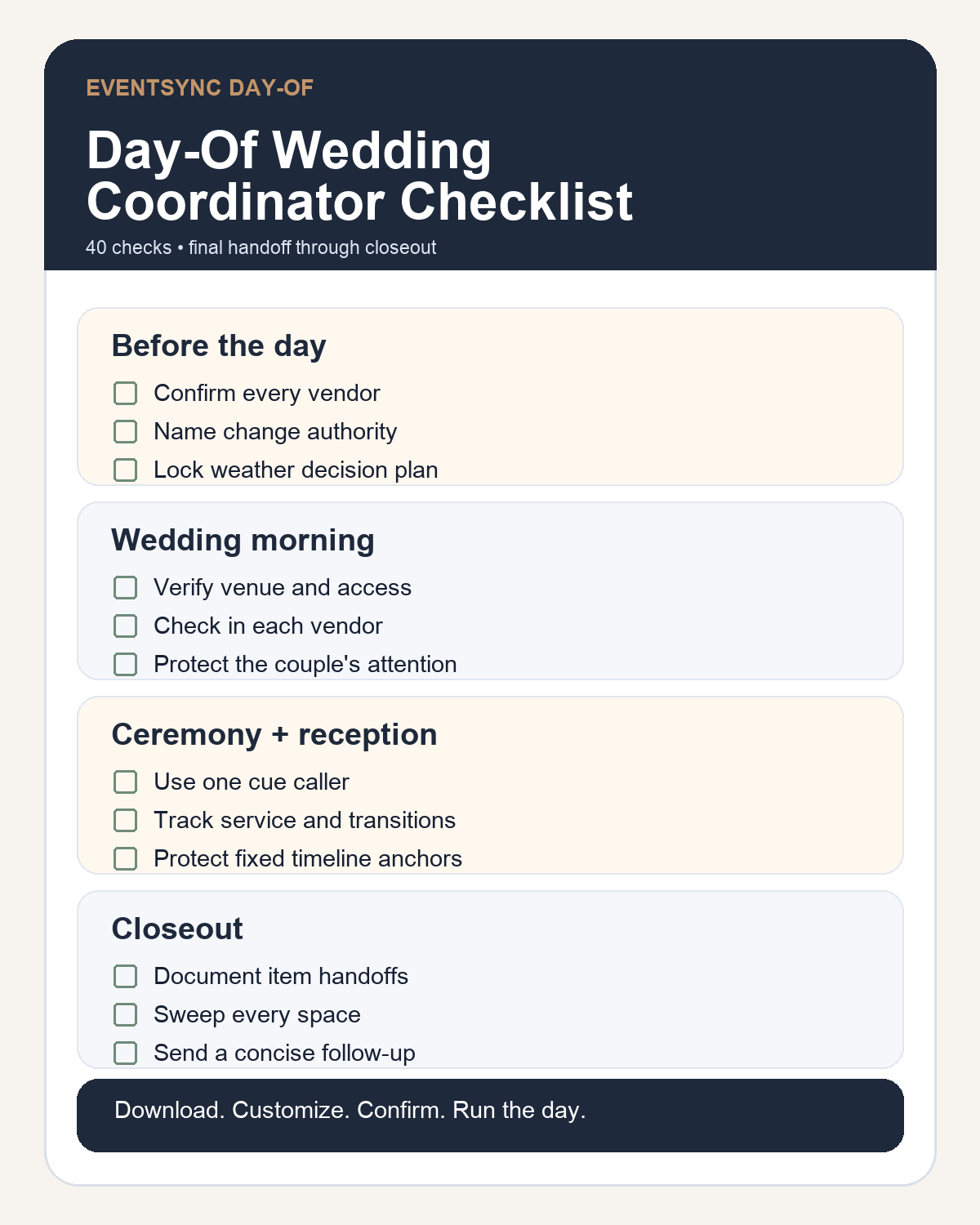
The day-of wedding coordinator checklist, hour by hour
Use forty practical checks from final handoff through the next business day. Customize the owners, due dates, venue rules, traditions, access needs, and weather plan before relying on it.
Updated September 4, 202640 real checksNo email gate
Every format is ungated. Google asks you to sign in only to save a private copy to your Drive; the PDF, Excel, Word, and CSV downloads do not require an EventSync account.
The complete downloads include all forty checks, owners, timing, confirmation notes, and closeout.
What this checklist does and does not do
A checklist can organize confirmed information and keep routine questions away from the couple. It does not create authority, replace vendor contracts, verify food-allergy safety, or turn an unprepared helper into a professional coordinator.
Name one person who may approve timeline changes, one cue caller for each major transition, and a clear escalation path before the wedding day begins.
Four to two weeks before
Build the final handoff while there is still time to resolve missing owners, access, and contract details.
Final week
Get explicit confirmations instead of assuming an old email or contract still reflects the operational plan.
48 to 24 hours before
Wedding morning and setup
Verify access and safety before production begins, then keep each vendor’s immediate dependency visible.
Pre-ceremony
Ceremony
Cocktail hour and reception
Move people before decor, confirm every release cue, and protect kitchen and hard-stop timing.
Breakdown and handoffs
After the wedding
Confirm the useful details with each vendor
A general “yes, we have the timeline” is not enough. Ask each vendor to confirm the part they own, the person who will be present, and the dependency that could change their work.
Photographer and videographer
Confirm arrival, coverage end, portrait locations and group list, travel, meal timing, sunset plan, and the person who gathers family.
Venue and caterer
Confirm access, loading, layouts, room flips, service and vendor meals, dietary handoff, bar timing, cleanup, and the hard stop.
DJ, band, and officiant
Confirm arrival and soundcheck, processional order, names and pronunciations, ceremony cues, entrances, speeches, dances, and final song.
Beauty, floral, rentals, and transport
Confirm staffed start and finish times, delivery and pickup windows, inventory owners, exact pickup points, loading time, and late-arrival contacts.
When a professional coordinator is the safer choice
Complex movement
Multiple venues, shuttles, long travel, tight room flips, large wedding parties, or accessibility routing need experienced attention.
Complex production
Many vendors, installations, live entertainment, strict venue rules, or overlapping setup dependencies add operational risk.
Complex people needs
Cultural traditions, family dynamics, sensitive handoffs, or a helper who also expects to be a guest can exceed a friend’s capacity.
Unclear authority
If nobody is prepared to approve changes, enforce contracts, or make time-sensitive calls, solve that gap before the wedding.
Turn the confirmed checks into a live timeline
Use the free builder after the handoff is clear. Add the actual times, owners, locations, and buffers, then export a clean wedding-day schedule.
Planning with a team on desktop? After the outline is ready, you can continue in EventSync Workspace and use EventSync Day-Of on mobile during the wedding.
Vendor arrivals, venue access, ceremony cues, timeline ownership, weather decisions, family photo timing, transportation, room flips, reception transitions, closeout, and who can approve changes.
Can a friend use this checklist?
Yes, when the wedding is within their experience and they have authority, confirmed contacts, an escalation path, and enough time to focus on coordination rather than participating as a guest.
Can I use the checklist in Google Sheets?
Yes. Use the Google Sheets button to create a private, editable copy in your own Drive. The XLSX download remains available for Excel and offline use.
When is a professional coordinator the safer choice?
Consider a qualified professional when the venue, guest count, travel, production, accessibility needs, cultural traditions, vendor count, or family dynamics exceed a helper’s experience or attention capacity.