A lot of wedding planning work ends in a digital binder, spreadsheet, PDF timeline, or shared folder. That is useful. It gives everyone one place to find the plan before the wedding day starts.
But the final day needs more than storage. It needs ownership. Someone who is not the couple has to hold the run of show, know which moments are protected, and decide how updates move through the team.
Best for storing the plan
Contracts, inspiration, layouts, hotel blocks, vendor details, old timeline drafts, ceremony notes, and reference files can live in a binder or shared folder.
Best for running the day
The final run sheet should show times, owners, locations, vendor contacts, protected anchors, handoff notes, and controlled live updates.
When a spreadsheet or PDF is enough
A shared spreadsheet or PDF run sheet can work for a simple wedding if the plan is stable and one reliable person owns the timeline. That person should not be the couple, and they should have clear authority to answer small timing and handoff questions.
For a spreadsheet to be useful on the wedding day, build it like a run sheet, not just a schedule. Include the time, owner, location, notes, vendor contact, and who has authority to approve changes.
When a live run of show starts helping
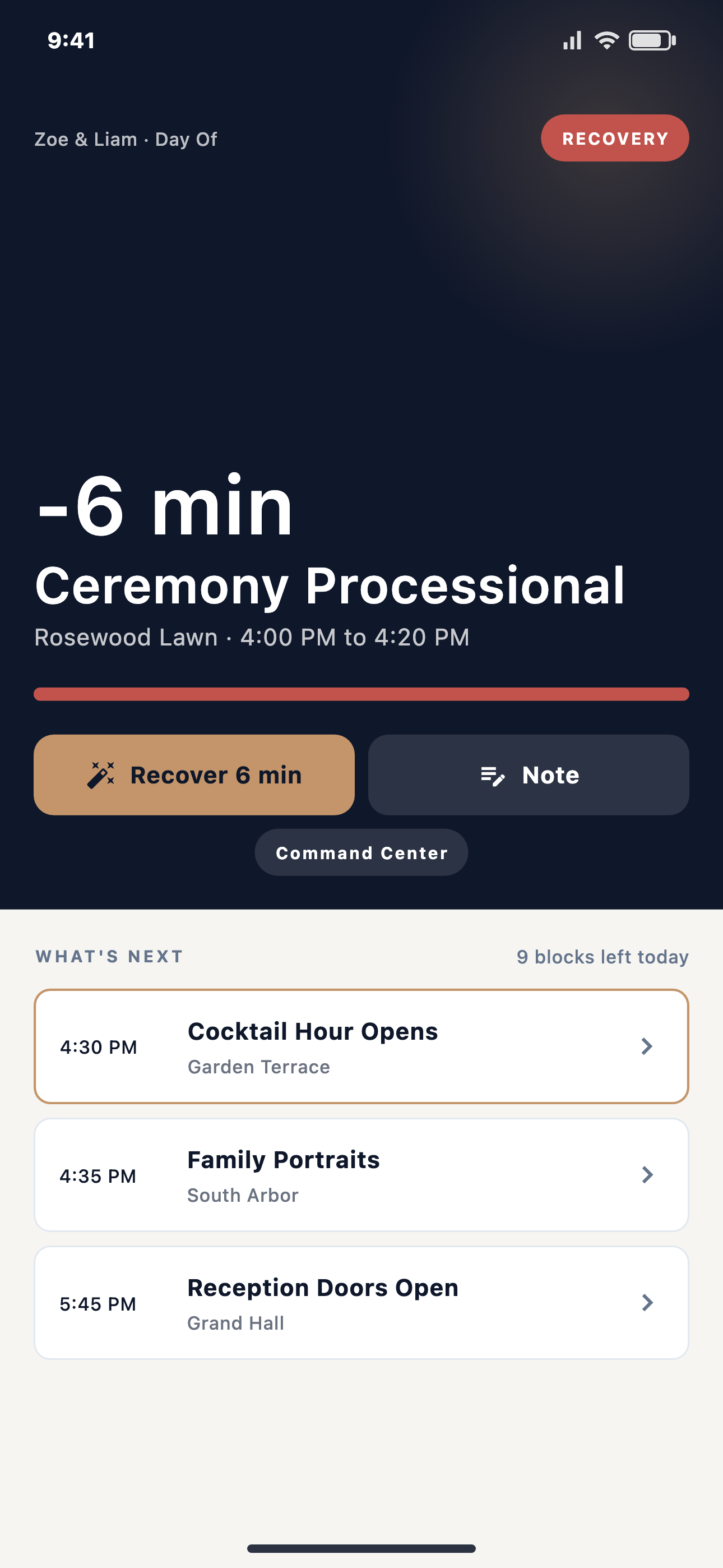
A live run of show becomes useful when the day has moving parts: multiple vendors, transportation, a room flip, ceremony timing, photo constraints, family cues, or a coordinator who needs to send updates without creating a group-text mess.
Role lanes
The DJ, photographer, caterer, venue, family helper, and couple do not all need the same production document.
Protected anchors
Ceremony, meal service, transportation, portraits, and major announcements need stronger protection than flexible filler blocks.
Controlled updates
When the plan changes, the right people need the new version without everyone interpreting an old PDF differently.
The practical rule: use the binder for reference, the run sheet for execution, and a person with authority to make day-of decisions.
What EventSync is not
Not a coordinator replacement
You still need a coordinator, planner, venue lead, or reliable person who is not the couple to own the day.
Not another generic portal
EventSync focuses on the final day-of operating layer: live timeline, owners, vendors, broadcasts, role views, recovery, and print backup.
Not a magic app
The app cannot make decisions for the team. It helps the person in charge see the right context and communicate changes cleanly.
Not a CRM replacement
Keep contracts, invoices, long-term client records, and deep planning operations in the tools that already serve that work.
Where EventSync fits
EventSync is designed for the handoff between planning and live execution. The planner or day-of lead can prepare the timeline as a run sheet, mark protected anchors, keep vendor and team contacts close, print a final backup, and use Day-Of Command when the schedule starts moving.
That means EventSync can sit beside a planning binder, spreadsheet, or professional planning suite. The goal is not to replace the human coordinator. The goal is to give that person a clearer operating system for the wedding day.